
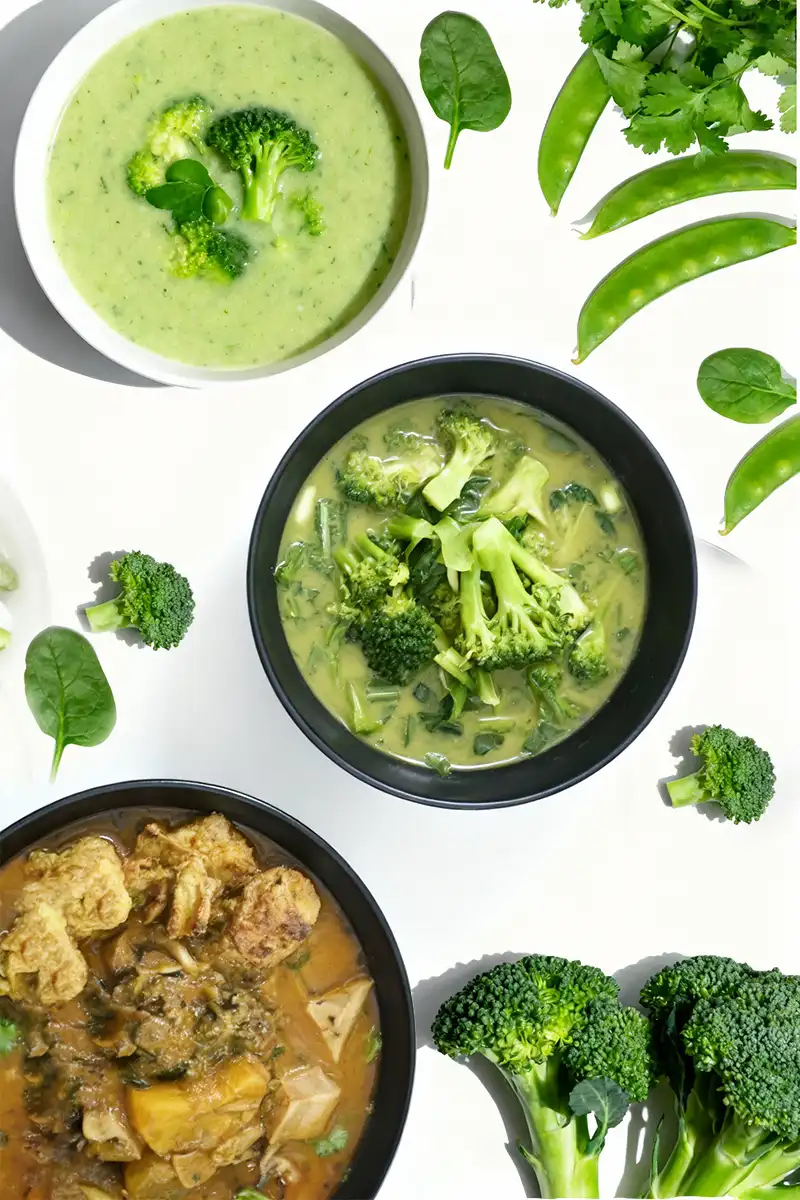
Most modern meals lean too far into acid-forming territory. Between meat-heavy dishes, sugar-laden snacks, and processed grains, your body ends up working harder to maintain internal balance. These alkalizing soup recipes offer a smart, easy way to restore that balance and support your overall energy, digestion, and wellness.
This guide will show you what makes a soup alkalizing, which ingredients support a lower acid load, and seven specific recipes built to help your body feel lighter and more supported every day.
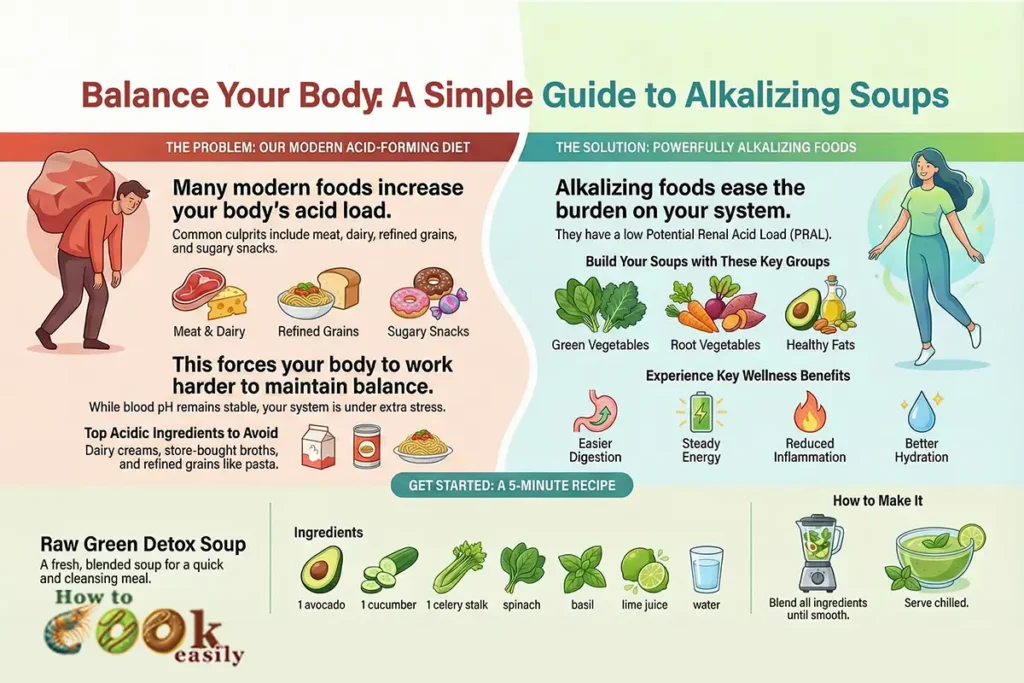
Table of Contents
Alkalizing Soup Recipes: 7 Simple and Powerful Recipes to Balance Your pH and Energy
7 alkalizing soup recipes made with high-mineral vegetables, healthy fats, and herbs to support energy and reduce acid load.
- Prep Time: 25 minutes
- Cook Time: 10 minutes
- Total Time: 35 minutes
- Yield: 7 servings 1x
- Category: Soups
- Method: Blended, Simmered
- Cuisine: Wellness, Alkaline
- Diet: Vegan
Ingredients
RAW GREEN DETOX SOUP:
1 avocado
1 cucumber
1 celery stalk
1 cup spinach
Handful fresh basil
Juice of 1 lime
1 cup filtered water
Pinch sea salt
GOLDEN ROOT VEGETABLE SOUP:
3 carrots
1 small sweet potato
1-inch ginger
1 tsp turmeric
2 cups homemade vegetable broth
1 tbsp olive oil
CREAMY BROCCOLI HEMP SOUP:
1 head broccoli
1 small zucchini
1/2 cup light coconut milk
1/3 cup hemp seeds
2 cups water or broth
Sea salt
MISO SEA VEGETABLE SOUP:
1 tbsp miso paste
1 sheet wakame (soaked, chopped)
2 dried shiitake mushrooms
2 cups hot water
Sliced scallions
ALKALINE GAZPACHO:
2 tomatoes
1 red bell pepper
1 celery stalk
1/4 red onion
1 tbsp apple cider vinegar
1 tbsp olive oil
Sea salt
SPINACH LIME SOUP:
2 cups spinach
Juice and zest of 1 lime
1/4 avocado
1 green onion
1 cup warm water
Pinch sea salt
ASPARAGUS OREGANO SOUP:
1 bunch asparagus
1/2 zucchini
1 tsp oregano
1 tbsp olive oil
2 cups broth
Instructions
1. Blend all raw green soup ingredients until smooth. Chill and serve with microgreens.
2. Roast carrots and sweet potatoes for 20 mins. Blend with broth, ginger, and turmeric. Simmer and drizzle olive oil.
3. Steam broccoli and zucchini lightly. Blend with hemp seeds and coconut milk. Simmer for 5 mins.
4. Rehydrate wakame and mushrooms. Mix miso with hot water. Combine and simmer for 5 mins.
5. Blend gazpacho ingredients. Chill for 2 hours. Serve with chopped herbs.
6. Blend spinach and lime ingredients until smooth. Heat gently if desired.
7. Steam asparagus and zucchini. Blend with broth and oregano. Simmer for 10 mins.
Notes
Use filtered water or homemade broth to reduce acid load.
Avoid overcooking vegetables to retain minerals.
Add fresh herbs before serving for more alkalinity.
Batch-cook and refrigerate for up to 3 days.
Nutrition
- Serving Size: 1 bowl
- Calories: 130
- Sugar: 4g
- Sodium: 160mg
- Fat: 9g
- Saturated Fat: 2g
- Unsaturated Fat: 6g
- Trans Fat: 0g
- Carbohydrates: 10g
- Fiber: 3g
- Protein: 4g
- Cholesterol: 0mg
What is an alkalizing soup, and why should you eat it?
The average diet in the U.S. includes high-acid foods: coffee, cheese, white bread, and meat. These increase the acid burden on your system. While your blood pH stays stable, your body has to work harder to keep it that way. Alkalizing soups use low-PRAL foods to ease that burden.
They offer:
- Easier digestion from whole, plant-based ingredients
- Steady energy through better mineral intake
- Reduced inflammation by cutting common irritants
- Hydration and fiber to support elimination
The recipes in this guide follow the same idea as our Guide to Natural Detox Foods. They focus on real, accessible ingredients with specific functions.
Myths vs. Reality: The Role of Alkalizing Soups
You don’t need to change your blood pH. That’s handled by your kidneys and lungs. What you eat does affect how hard those systems have to work.
Alkalizing soups:
- Focus on plant-rich, minimally processed ingredients
- Keep PRAL scores low
- Offer better nutrient absorption through balanced fats
- Reduce sodium, animal protein, and artificial additives
This isn’t a diet trend. It’s a return to simpler meals made from real food.
Foods are measured by their Potential Renal Acid Load (PRAL), which estimates the acid or base a food leaves after digestion. A negative PRAL indicates an alkalizing effect. According to NIH research, vegetables and fruits generally have a low or negative PRAL, supporting internal balance without stressing the kidneys (NIH study).
The Alkalizing Ingredients: The Power of Greens and Roots
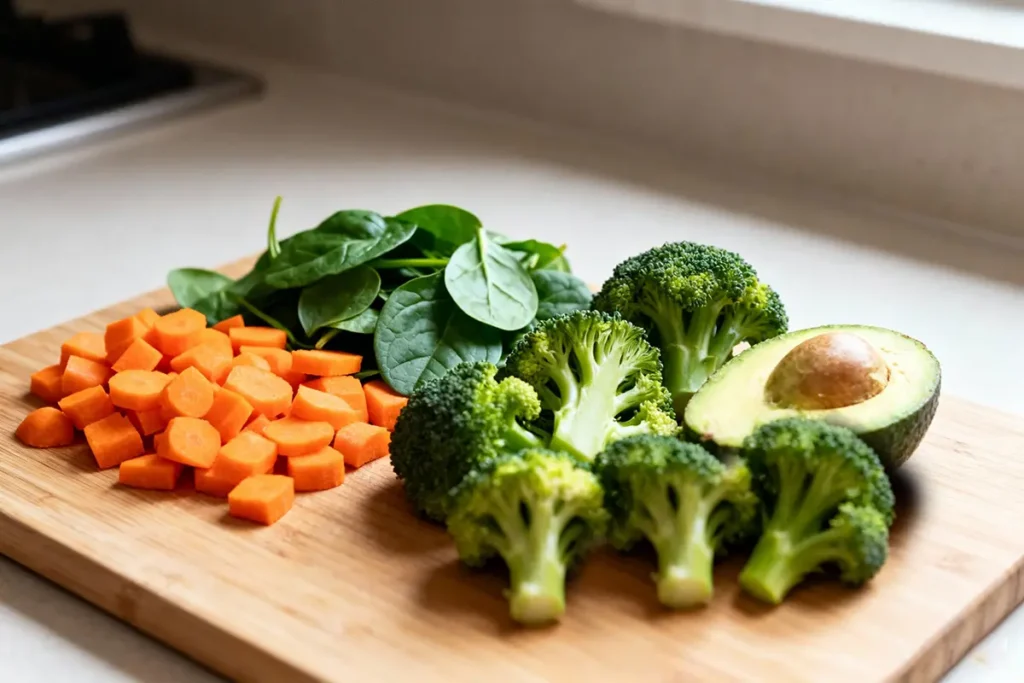
PRAL (Potential Renal Acid Load) shows how much acid or base a food leaves after digestion. Alkalizing foods have a negative or near-zero PRAL. You’ll use:
Green Vegetables
Spinach, kale, celery, and zucchini all qualify. They bring in potassium, magnesium, calcium, and fiber. They hydrate the body while lowering the acid load.
Root Vegetables
Carrots, beets, sweet potatoes, and parsnips offer texture and gentle sweetness. Carrots are rich in vitamin A. Beets help blood flow. They keep soups filling without overloading your body.
Neutral Healthy Fats
Avocado, olive oil, and hemp seeds make soups creamy and nutrient-dense. They aid absorption of vitamins A, D, E, and K.
Use these ingredients as the base. Then add light herbs and spices for flavor.
Traps to Avoid: Acid-Forming Ingredients to Exclude
Watch for common acidic additions:
- Dairy creams, cheese, or yogurt
- Refined grains like white rice, pasta, or cornstarch
- Store-bought broth or bouillon cubes
These raise the acid load. Instead, go for high-mineral homemade stocks. Our alternative: How to Make a Healthy and Easy Homemade Vegetable Broth. If needed, a splash of coconut milk keeps it creamy without dairy.
Keep cooking times short. Overcooking drains nutrients. Focus on short simmers or raw blending to preserve enzymes and flavor.
Easy and Delicious Alkalizing Soup Recipes
These seven soups use high-alkaline ingredients, are quick to prepare, and work well for both warm and cold days. You can prep many of them in under 30 minutes.
1. Raw Green Detox Soup
A fresh, blended soup for days when you need something quick and cleansing.
Ingredients:
- 1 ripe avocado
- 1 cucumber
- Handful of spinach
- Handful of fresh basil
- 1 stalk of celery
- Juice of 1 lime
- 1 cup filtered water or homemade broth
- Sea salt to taste
Instructions:
Blend all ingredients until smooth. Serve chilled. Add hemp seeds or microgreens for texture.
2. Golden Root Vegetable Comfort Soup
Warming and grounding with bright flavor.
Ingredients:
- 3 carrots
- 1 small sweet potato
- 1-inch fresh ginger
- 1 tsp turmeric
- 2 cups homemade vegetable broth
- 1 tbsp olive oil
Instructions:
Chop and roast roots for 20 minutes. Blend with broth, ginger, and turmeric. Simmer for 10 minutes. Drizzle with olive oil.
3. Creamy Broccoli and Hemp Velouté
A dairy-free soup with strong texture and flavor.
Ingredients:
- 1 head broccoli
- 1/3 cup hemp seeds
- 1/2 cup light coconut milk
- 1 small zucchini
- 2 cups water or broth
- Sea salt to taste
Instructions:
Steam broccoli and zucchini lightly. Blend with hemp seeds and coconut milk. Simmer briefly.
4. Miso and Sea Vegetable Soup
Mineral-rich and satisfying.
Ingredients:
- 1 tbsp mellow white miso
- 1 sheet wakame, soaked and sliced
- 2 shiitake mushrooms
- 2 cups hot water
- Scallions and sesame seeds for garnish
Instructions:
Rehydrate wakame and mushrooms. Stir miso into hot water. Add all. Simmer for 5 minutes.
5. Alkaline Gazpacho (No Bread)
Fresh and energizing.
Ingredients:
- 2 tomatoes
- 1 red bell pepper
- 1 celery stalk
- 1/4 red onion
- 1 tbsp apple cider vinegar
- Sea salt
- 1 tbsp olive oil
Instructions:
Blend all ingredients. Chill. Serve with chopped herbs.
6. Spinach and Lime Soup
Light and citrusy.
Ingredients:
- 2 cups spinach
- Zest and juice of 1 lime
- 1/4 avocado
- 1 green onion
- 1 cup warm water
- Pinch sea salt
Instructions:
Blend until smooth. Heat lightly if desired.
7. Asparagus and Oregano Soup
Best in spring.
Ingredients:
- 1 bunch asparagus
- 1/2 zucchini
- 1 tsp dried oregano
- 1 tbsp olive oil
- 2 cups broth
Instructions:
Steam vegetables. Blend with broth and oregano. Simmer 10 minutes. Serve hot.
Many of these soups use similar preparation techniques. If you’re unfamiliar with how to prep roots for soups, refer to our guide on Mastering the Cooking of Root Vegetables.

Tips to Maximize the Alkalizing Effect of Your Soup
Keep these habits in mind for better results:
Use Homemade Vegetable Broth
Skip salt-heavy cubes. Use mineral-rich vegetables, water, and herbs. Strain and store.
Add Fresh Herbs
Basil, parsley, and cilantro improve flavor and alkalinity. Chop fresh and add before serving.
Splash of Apple Cider Vinegar
Though acidic, it’s alkalizing after digestion. One teaspoon per bowl adds brightness and balance.
Use glass storage and avoid microwaving to keep the nutrients intact. Batch-cook soups and store them for up to 3 days.
FAQs:
What soup is alkaline?
An alkaline soup uses ingredients with low or negative PRAL scores. These include spinach, kale, celery, cucumber, beets, carrots, and avocado. A soup becomes alkaline when it avoids dairy, meat, and refined grains. Good examples are raw green detox soup, miso soup with sea vegetables, or blended broccoli soup with hemp seeds.
What’s the healthiest homemade soup?
The healthiest soup is one made from whole, unprocessed ingredients with low sodium. A good alkaline example includes broccoli, spinach, turmeric, and ginger blended in homemade vegetable broth. Add olive oil or hemp seeds for healthy fats. The fewer the ingredients and additives, the healthier the soup.
What soups are not acidic?
Soups made with vegetables like spinach, celery, carrots, and zucchini are not acidic. Avoid acidic ingredients like tomatoes, dairy, processed meats, and artificial flavorings. Use herbs, lemon juice, or apple cider vinegar in small amounts—they metabolize as alkaline.
Is carrot soup acidic or alkaline?
Carrot soup is slightly alkaline. Carrots have a low PRAL score. When blended with broth, turmeric, and ginger, the soup supports balance without adding acid load. Avoid adding cream or stock cubes to keep it alkaline.
Integrating Alkalizing Soups into Your Daily Life
Alkalizing soups are simple. They don’t require strange ingredients or strict rules. Use seasonal vegetables, avoid processed additions, and cook with purpose. Try one of these recipes for lunch or dinner and adjust to your taste.
Keep it minimal. Let the food work for you. Rotate your ingredients. Your energy and digestion will reflect the change.