
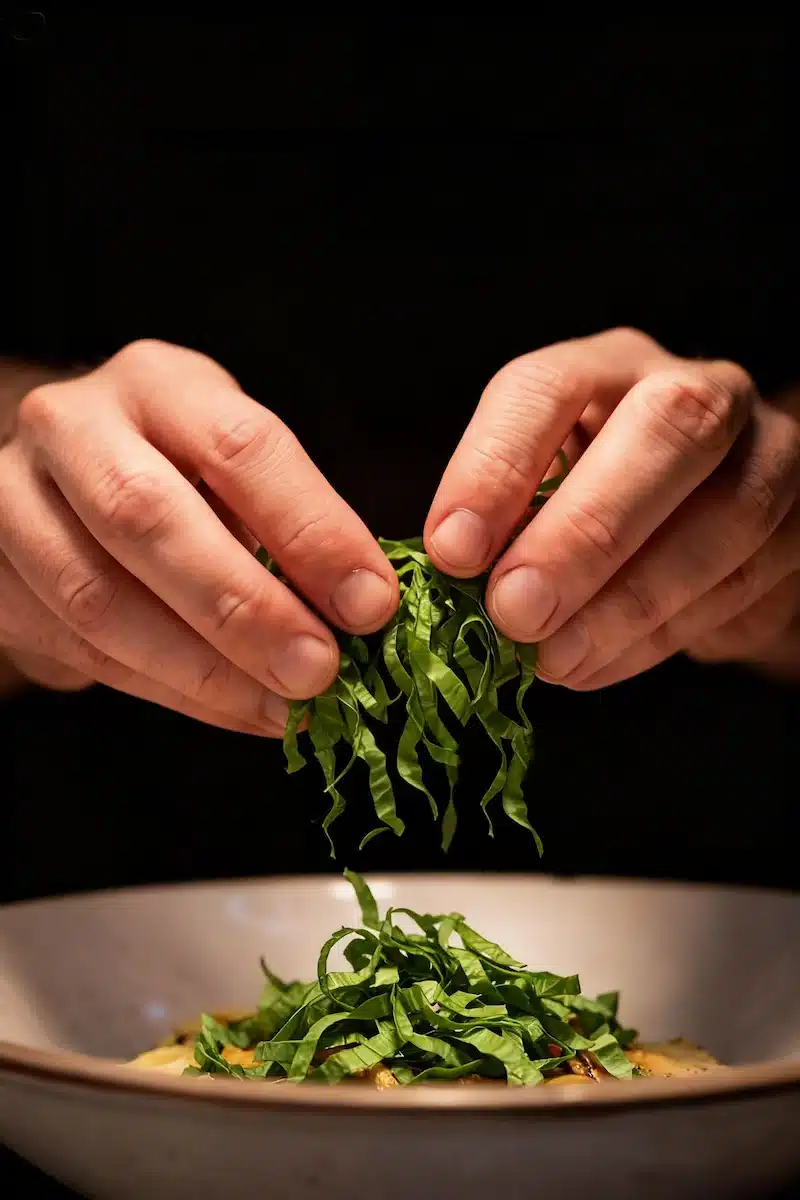
Few culinary techniques are as deceptively simple, and as quietly influential, as basil chiffonade. At first glance, it is nothing more than thin ribbons of fresh basil. Yet behind those emerald strands lies centuries of culinary tradition, botanical knowledge, knife craft, and aesthetic philosophy. From medieval herb gardens to modern Michelin-star kitchens, basil chiffonade represents the intersection of flavor, form, and finesse.
This article explores chiffonaded basil not merely as a cutting method but as a cultural artifact: how it emerged, why it matters, how it shapes flavor perception, and how it continues to evolve across cuisines and cooking technologies. Whether you are a home cook seeking refinement or a food historian tracing culinary lineage, basil chiffonade offers a surprisingly rich story.
Table of Contents
What Is Basil Chiffonade?
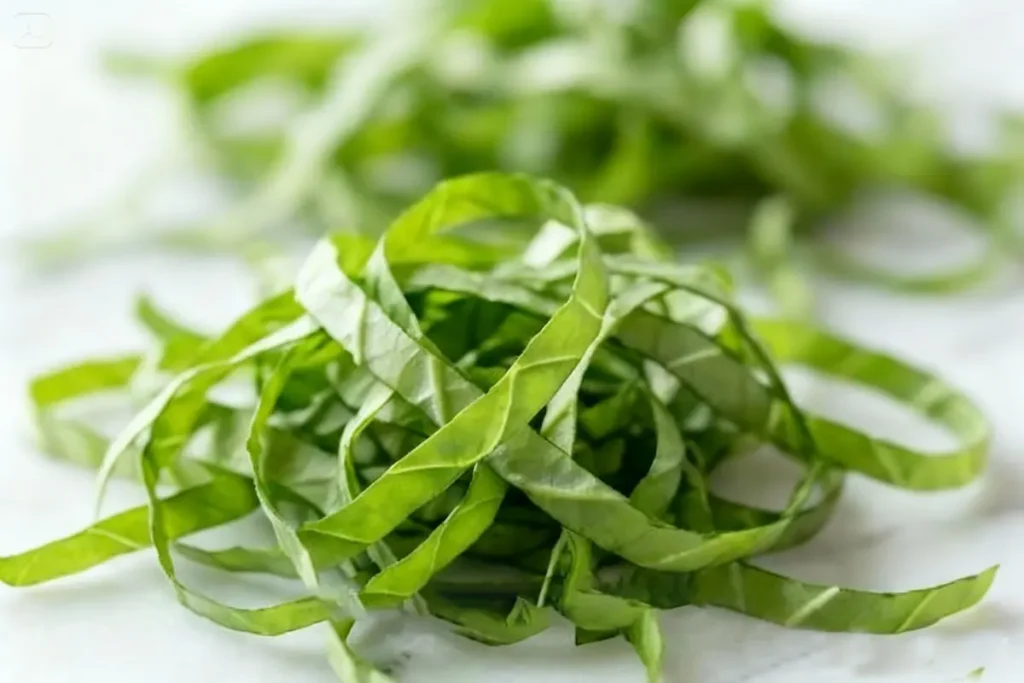
The word “chiffonade” comes from the French verb “chiffonner,” meaning “to rag” or “to shred.” In classical French cuisine, chiffonade refers to herbs or leafy greens that are stacked, rolled tightly, and sliced into fine ribbons using a sharp knife.
When applied to basil, chiffonade produces long, delicate strips that:
- Release aroma gradually rather than all at once
- Minimize bruising and oxidation
- Disperse evenly across a dish
- Elevate visual presentation
chiffonaded basil is most often used as a finishing element, sprinkled over pasta, pizza, soups, salads, eggs, grilled vegetables, and even desserts, rather than cooked aggressively.
Basil Before the Blade: A Brief Cultural History
Long before chefs refined cutting techniques, basil held deep symbolic meaning.
Ancient Roots
Basil (Ocimum basilicum) likely originated in India or Southeast Asia, where it was revered both culinarily and spiritually. In Hindu traditions, sacred basil (tulsi) symbolized purity and protection. While sweet basil, the variety most often chiffonaded, differs botanically from tulsi, the reverence for the plant traveled westward through trade routes.
Mediterranean Adoption
By the time basil reached the Mediterranean basin, it had become inseparable from regional cuisines:
- Italy embraced basil as a cornerstone herb, pairing it with tomatoes, olive oil, and cheese.
- France incorporated basil into fines herbes and herb-forward sauces.
- Greece and North Africa used basil sparingly but symbolically, often in summer dishes.
The refinement of basil chiffonade emerged alongside the rise of French culinary formalism in the 17th and 18th centuries, when knife skills became codified as marks of professional training.
Why Chiffonade Matters: Flavor, Science, and Sensory Experience
At a molecular level, basil is fragile. Its aromatic compounds, especially eugenol and linalool, are volatile and easily degraded by heat, crushing, or dull blades.
The Science Behind the Cut
Chiffonade protects basil’s integrity by:
- Reducing cell rupture, which slows enzymatic browning
- Limiting surface area exposure, preserving aroma
- Encouraging gradual flavor release, enhancing balance
This is why tearing basil by hand produces a different flavor profile than slicing it finely, and why mincing basil often leads to bitterness.
In short, basil chiffonade is not just prettier, it is chemically smarter.
The Technique: How Basil Chiffonade Is Done Properly
While simple in theory, basil chiffonade demands attention to detail.
Step-by-Step Overview
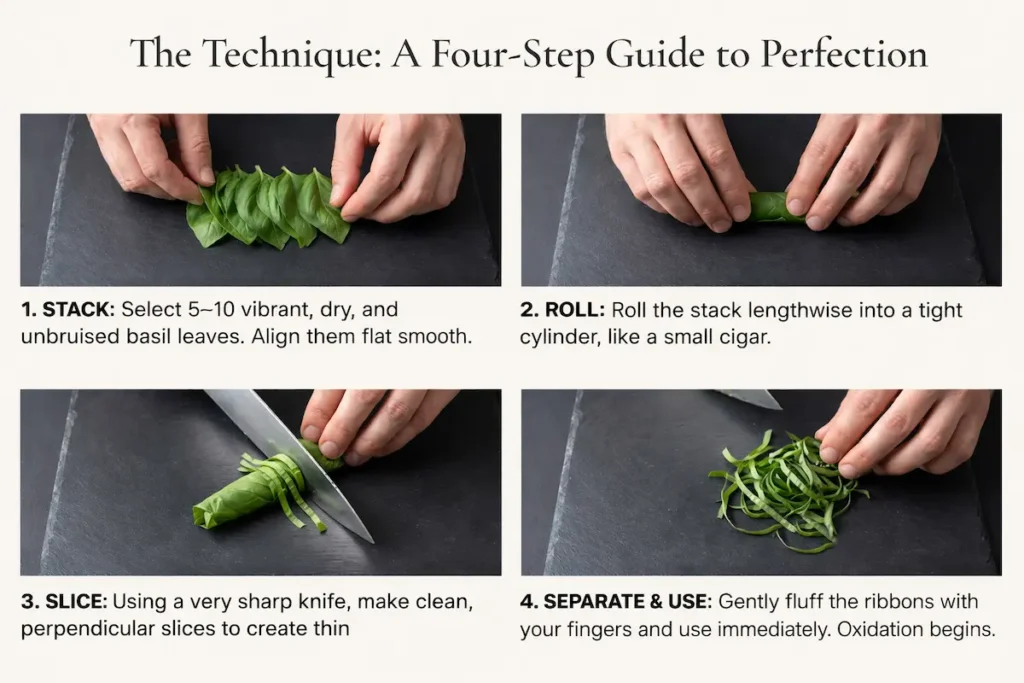
- Select fresh basil
Leaves should be vibrant, dry, and free from bruising. - Stack the leaves
Align 5–10 leaves, flat and smooth. - Roll tightly
Roll lengthwise into a cigar shape. - Slice cleanly
Use a very sharp knife, slicing perpendicular into thin ribbons. - Use immediately
Basil chiffonade is best fresh, oxidation begins within minutes.
Knife Matters More Than You Think
A dull knife crushes basil fibers, causing discoloration and bitterness. Professional kitchens often reserve a dedicated razor-sharp blade for herbs alone.
Basil Chiffonade Across World Cuisines
Although the technique is French, its application is global.
Italian Cuisine
In Italy, basil chiffonade crowns:
- Margherita pizza
- Caprese salad
- Tomato-based pastas
It is added at the final moment, never cooked long, preserving basil’s sweet, peppery perfume.
Southeast Asian Influences
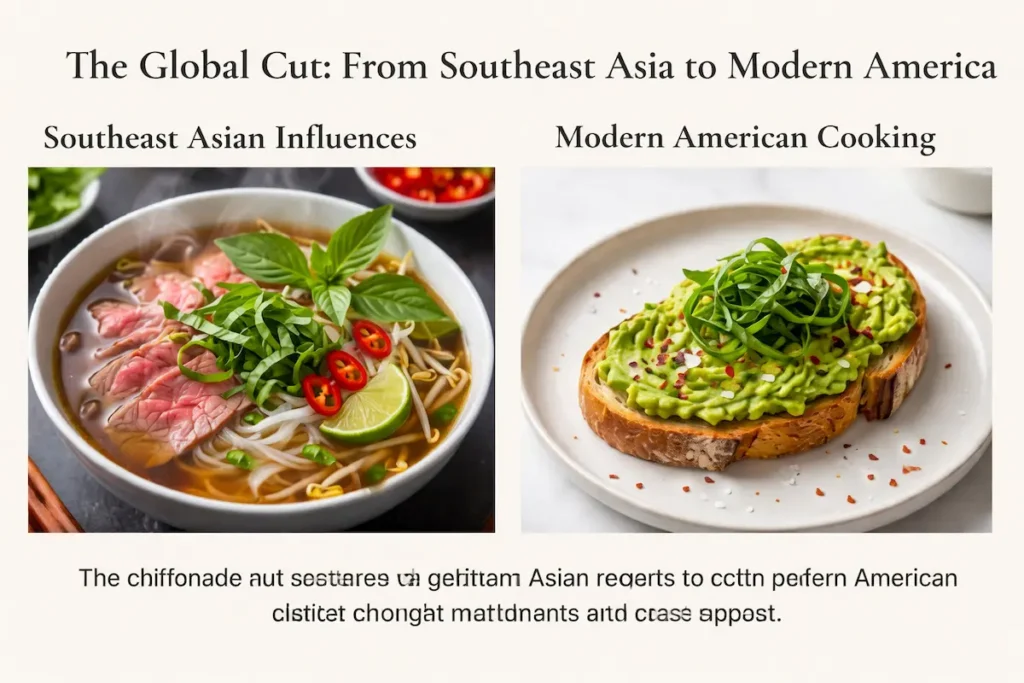
Thai and Vietnamese dishes sometimes use chiffonade-like cuts for Thai basil or holy basil, scattered over soups or stir-fries just before serving.
Modern American Cooking
Contemporary American kitchens have embraced basil chiffonade as both garnish and flavor layer, appearing in everything from avocado toast to air-fried proteins.
For example, basil chiffonade pairs beautifully with modern appliances and quick-cook dishes like air fryer salmon or herb-forward casseroles. It can subtly elevate savory meals such as this air fryer pomegranate glazed salmon by adding freshness against rich glaze.
Visual Aesthetics: Why Chefs Love Basil Chiffonade
Food is eaten with the eyes first, and basil chiffonade delivers visual harmony:
- Long ribbons create movement on the plate
- Bright green contrasts with reds, creams, and browns
- Uniformity signals precision and professionalism
This aesthetic appeal explains why basil chiffonade appears so frequently in food photography and restaurant plating.
Basil Chiffonade vs. Other Herb Cuts
Understanding chiffonade becomes clearer when compared to other techniques:
| Cut Style | Result | Best Use |
|---|---|---|
| Chiffonade | Long ribbons | Finishing, garnish |
| Mince | Tiny fragments | Sauces, marinades |
| Chop | Rough pieces | Rustic dishes |
| Tear | Irregular | Casual salads |
Chiffonade sits at the refined end of the spectrum, intentional, elegant, and controlled.
Common Mistakes (and How to Avoid Them)
Even experienced cooks make errors with basil chiffonade.
Cutting Too Early
Pre-cut basil darkens quickly. Always chiffonade just before serving.
Refrigerating Cut Basil
Cold accelerates oxidation. Basil chiffonade should never be stored.
Washing After Cutting
Water damages cut edges. Wash and dry basil before slicing.
Basil Chiffonade in Modern Food Trends
As home cooking evolves, basil chiffonade continues to find new relevance.
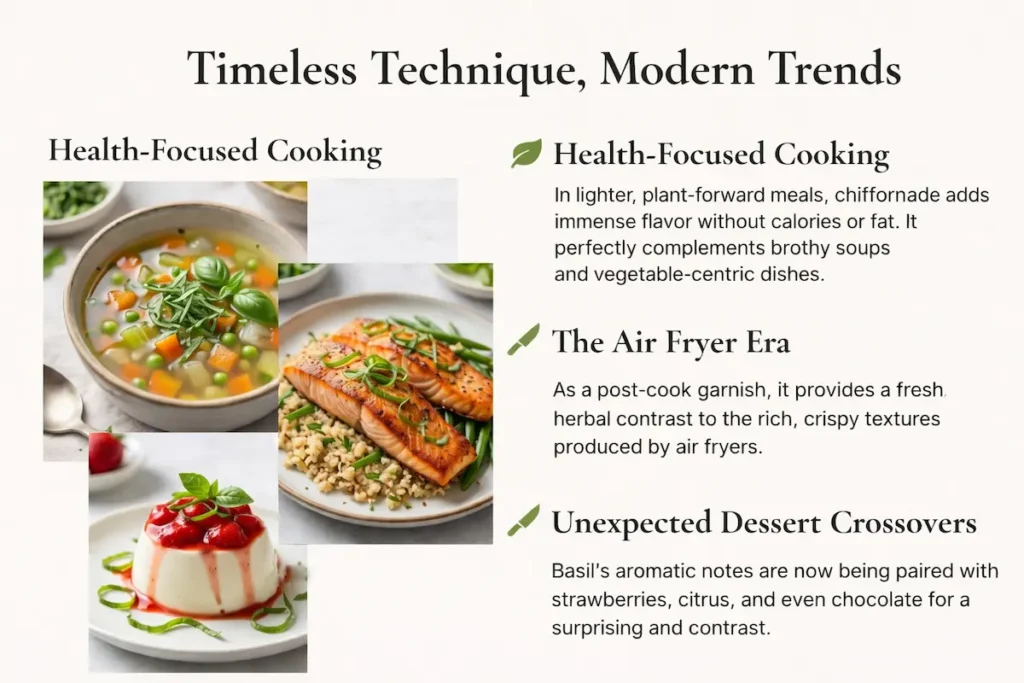
Health-Focused Cooking
In lighter, vegetable-forward meals, such as brothy soups or alkaline-inspired dishes, basil chiffonade adds flavor without calories. It complements clean, plant-forward approaches like those seen in alkaline soup recipes, such as this guide on alkalizing soup recipes.
Air Fryer Era
With the popularity of air fryers, basil chiffonade has become a post-cook garnish staple. Crispy dishes benefit from a fresh herbal contrast, whether topping air fryer catfish nuggets or finishing comfort foods like air fryer chuck roast.
Dessert Crossovers
Unexpectedly, basil chiffonade has crossed into desserts, paired with strawberries, citrus, or chocolate for aromatic contrast. While not traditional, it echoes the same balance sought in modern sweets like sugar-free or refined desserts, similar in spirit to innovations such as sugarless chocolate truffle cake.
Cultural Symbolism of Basil on the Plate
Beyond flavor, basil carries meaning.
- In Italy, basil symbolizes love and prosperity
- In Greece, it is associated with protection
- In India, basil represents devotion and purity
When chiffonaded and placed delicately atop a dish, basil becomes more than an ingredient, it becomes a statement of care.
Basil Chiffonade at Home: When to Use It
Use chiffonaded basil when:
- A dish feels heavy and needs brightness
- Presentation matters
- You want aroma without overpowering flavor
Avoid it when:
- Cooking long-simmered sauces
- Freezing food
- Preparing dishes hours in advance
The Future of Basil Chiffonade
As culinary culture continues to blend tradition with innovation, chiffonaded basil remains timeless. It adapts effortlessly, from rustic kitchens to modern food labs, because it respects the ingredient.
In an age of shortcuts and automation, chiffonade reminds cooks to slow down, sharpen their knives, and honor the leaf.
FAQs About Basil Chiffonade
What does basil chiffonade mean?
Basil chiffonade refers to a classic culinary cutting technique where fresh basil leaves are stacked, tightly rolled, and sliced into thin, ribbon-like strips. The term chiffonade comes from French and literally means “to shred into rags,” describing the delicate, flowing shape of the cut leaves. In cooking, basil chiffonade is prized for preserving aroma, preventing bruising, and creating an elegant presentation.
How do you make basil chiffonade?
To make basil chiffonade, follow these basic steps:
Wash and thoroughly dry fresh basil leaves.
Stack several leaves flat on top of one another.
Roll the stack lengthwise into a tight cylinder, similar to a cigar.
Using a very sharp knife, slice across the roll into thin strips.
Gently separate the ribbons and use immediately.
The key is a sharp knife and minimal handling to avoid crushing the basil.
How to make chiffonade?
The chiffonade technique is not limited to basil. It can be used for many leafy greens and herbs such as spinach, mint, or Swiss chard.
The general method is the same:
Stack the leaves evenly
Roll them tightly
Slice into fine ribbons
Chiffonade is typically used when you want a light, decorative cut that distributes flavor evenly without overpowering a dish.
What does chiffonade look like?
Chiffonade looks like long, thin ribbons of leafy greens or herbs. In the case of basil chiffonade, the result is bright green, silky strips that curl slightly and sit lightly on food. Visually, chiffonade adds movement and elegance to a plate, making it a popular finishing touch in both home cooking and professional kitchens.
If you imagine confetti-like strands rather than chopped pieces, you are picturing chiffonade correctly.
Final Thoughts: Why Basil Chiffonade Endures
Basil chiffonade endures not because it is complicated, but because it is thoughtful. It reflects an understanding that how we cut food changes how we experience it.
A few careful slices transform basil from a simple herb into a sensory accent, aromatic, visual, and cultural. In those thin green ribbons lie history, technique, and the quiet elegance of intentional cooking.
And that is why chiffonaded basil, though small in scale, holds a lasting place in the world’s kitchens.